Month: September 2021

  • OCLC Holdings Manager: a primer

    OCLC Holdings Manager: a primer

    The OCLC Holdings Manager is a project posted to GitHub as a licensed open source solution for any library in the world to download and use or improve upon. SWAN designed OCLC Holdings Manager (OHM) with OCLC Developer Network using the WorldCat Metadata API. The system is responsible for updating 25 million WorldCat holdings annually, which is 25% of the 104 million holding records for Illinois. The basics of how it works is described on the introductory readme.md of the Github project:

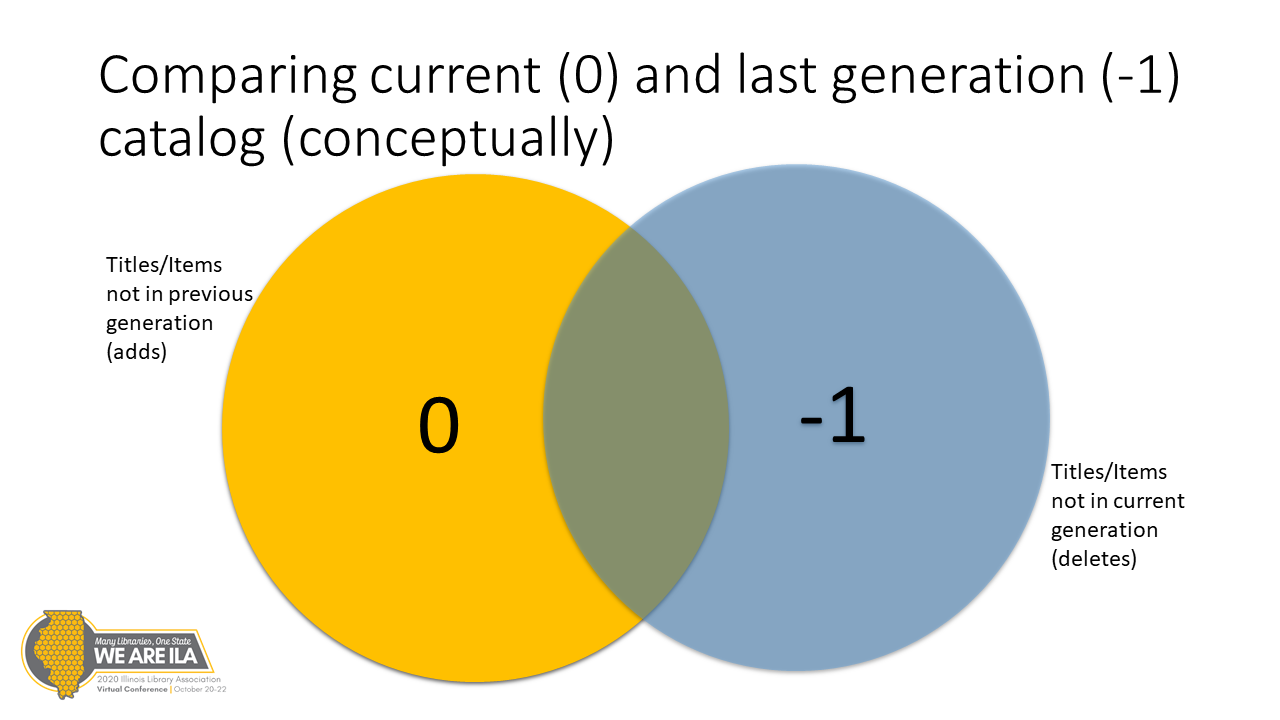
    OCLC Holdings Manager is a rule-based utility that analyzes MARC21 extracts and determines changes between datasets. This comparison is then used to set and unset WorldCat holdings using the OCLC WorldCat Metadata API. OHM was designed to be consortia ready, but should work just fine for standalone libraries as well.

    (See Github readme.md)
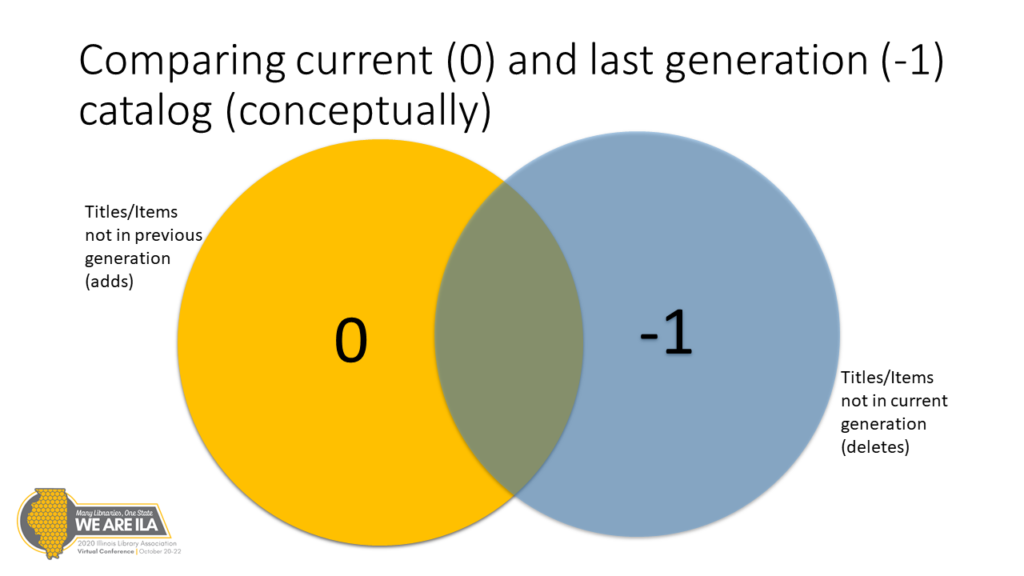
    Figure 1: OHM as a concept comparing two datasets

    Why are setting holdings in WorldCat important?

    WorldCat is the largest union catalog of library collections in the world. The ability to find and request items from reciprocating libraries within WorldCat is an amazing feat of library cooperation and leadership. Library users can search for any material eligible for lending and makes nationwide resource sharing possible. Having an accurate inventory of the library’s collection and the WorldCat system sets up efficiencies in WorldShare ILL and real-time availability (something else SWAN has accomplished).

    Some library consortium rely on individual libraries within their group to maintain accurate WorldCat holdings for the library. For other library consortium, this task is part of a central service. In Illinois, the State Library lead the effort to have library catalogs use OCLC as the sole bibliographic utility and to fund at the state level the effort to capture the library collections at a given moment in time (roughly monthly) and have a vendor update WorldCat through an automated process. This allows Illinois to have a statewide catalog representing the collections of three thousand libraries.

    Note: Much of the background on the importance of OCLC WorldCat holdings can be found in a committee working group report, which outlines the importance of this work.

    How did OHM come about?

    For 20 years in Illinois the centralized process for updating one thousand consortium member collections was performed by The MARC of Quality using a proprietary utility named OSMOSIS.

    The origin of OHM was to develop a replacement of the use of the OSMOSIS service. The MARC of Quality had a contract with the Illinois State Library funded annually (at $26,100 in 2019) for 8 runs of the OSMOSIS service across the year for 3 Illinois library consortia, PrairieCat, RSA, and SWAN. In 2018, The MARC of Quality announced that the service would no longer be supported, setting a two year sunset. This presented the library consortia with an opportunity to rethink the method of mass updating OCLC WorldCat holdings.
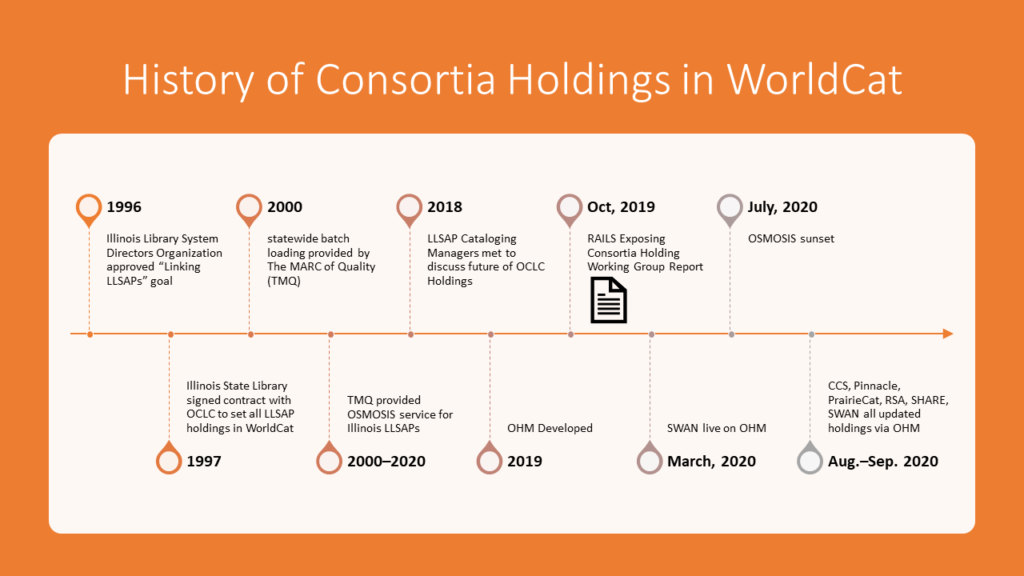
    Figure 2: a timeline of Illinois library activity related to WorldCat

    The process of creating what would become OHM started with Illinois consortium partners discussing what a new service would look like, and the opportunities for improving what had been a valuable 3rd party service. A typical month processing would set and unset WorldCat holdings for approximately 110,000 record adds and 165,000 record deletes. There is considerable churn within the six Illinois library consortia adding new titles and removing records no longer needed, so bulk updates to WorldCat required starting conversations with OCLC on the use of its set of Metadata APIs to accomplish this task.
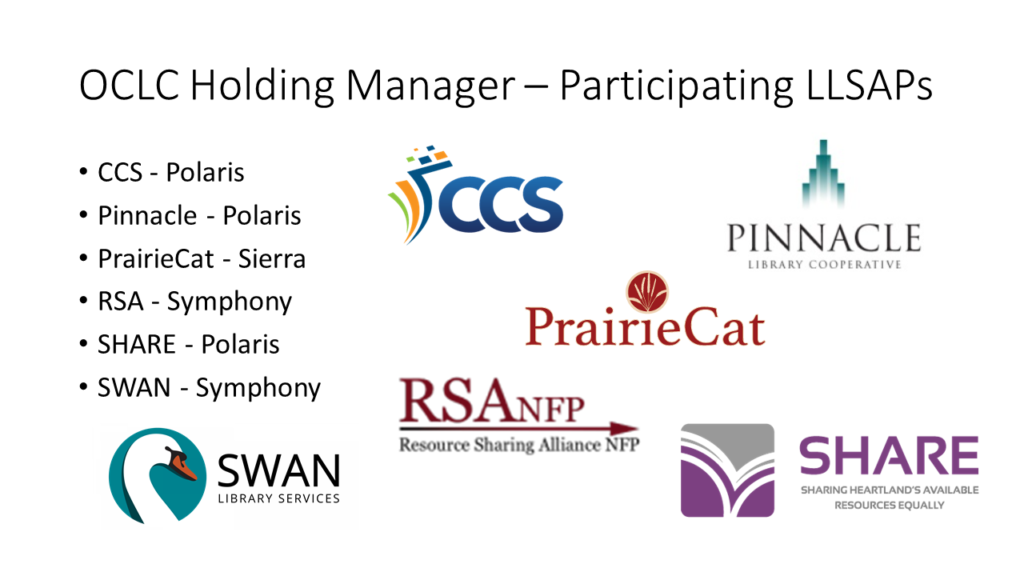
    Figure 3: the acronym LLSAP in Illinois is “local library system automation program” which dates back to the 1970s as an official way to describe a library resource sharing consortium

    What OHM can do

    For library consortia managing the WorldCat holdings of their libraries, OHM is a solution that can run with minimal requirements. The system utilizes a list of exported from the integrated library system, which is then uploaded into OHM. The system will compare that list to what had been uploaded prior, and from there it determines how it will perform adds and deletes within WorldCat for those member libraries.

    OHM requires a local installation on a system supporting Python, which is configured by an administrator as specified on the project Github. SWAN is utilizing a Linux server in its cloud environment for OHM, but it is flexible in how an administrator of OHM decides what operating system should run OHM.
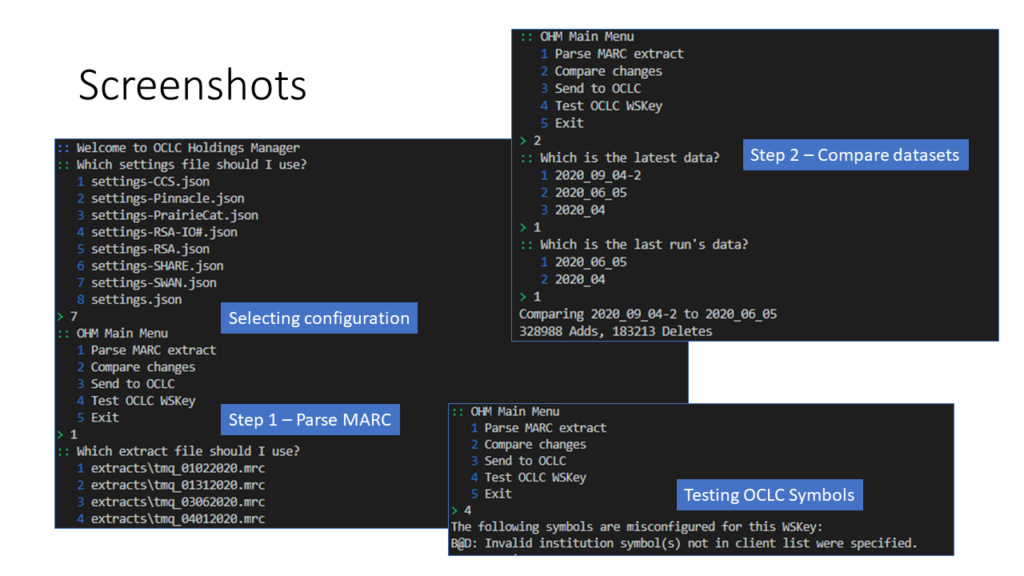
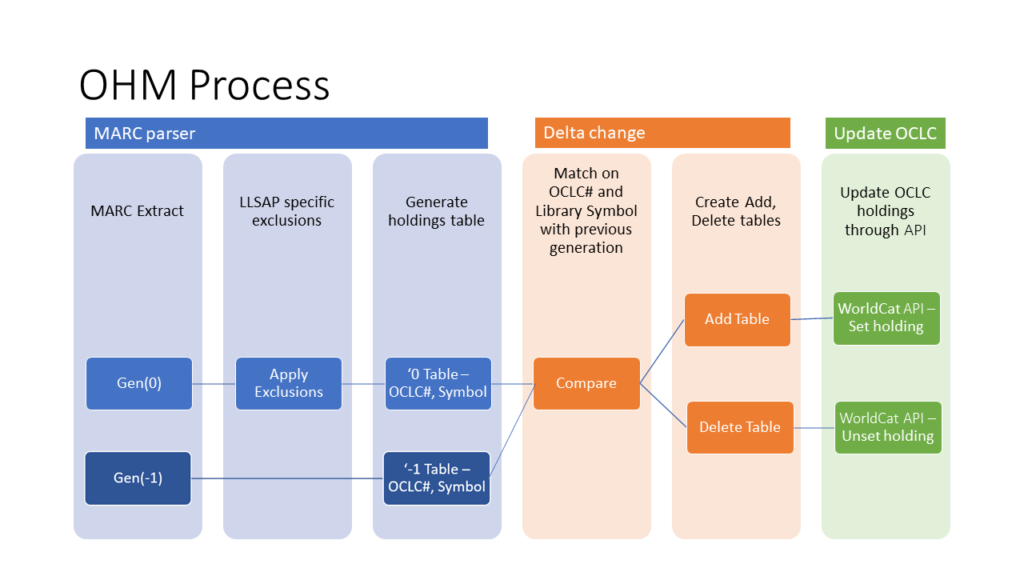
    Figure 4: command line examples of OHM steps
    Figure 5: OHM process diagram

    In addition to monthly holdings update, OHM has been used to facilitate a WorldCat reclamation when libraries are added to a consortium. Through use of OCLC Collection Manager, a snapshot of holdings for the library can be retrieved, feeding into OHM as delete holdings. With the next full run of the consortium catalog, the new library’s holdings are then set/updated.

    OHM in full production

    The software platform jointly developed among the six Illinois library resource sharing consortia is now in full production with monthly updates of OCLC holdings reflecting the most accurate representation of the library collections in WorldCat Discovery to-date. Six Illinois consortia holdings in WorldCat are updated monthly using a software platform. The monthly processing is coordinated by a group of SWAN employees, ensuring back-up and redundancy in support.

    Acknowledgements

    The creation of OHM is the result of individuals at Computer Cooperative Services, Pinnacle Library Cooperative, PrairieCat, Resource Sharing Alliance, SHARE, and SWAN coming together over the course of a year to discuss and design the OCLC Holdings Manager. The success of this project would not have been possible without the involvement of Bruce Crocco, Cynthia Wilson, and Don Litner at OCLC.

    This overview uses visuals from the SWAN presentation of OHM at the Illinois Library Association 2020 virtual conference. The presentation by Dawne Tortorella, Rudy Host, and Scott Brandwein was not recorded or archived by the Illinois Library Association. These three individuals were instrumental in creating OHM.

  • My OCLC Global Council Statement

    The OCLC global council election will run from September 20, 2021 through October 1, 2021. I was accepted as a candidate. You can read all the candidate statements on the OCLC page dedicated to the 2021 slate. I have included my full candidate statement below.

    Biography – Please compose your professional profile, which will be used to promote your candidacy if you are selected by your Regional Council Nominating Committee.

    I have 22 years library experience with 12 years’ experience as Executive Director of the SWAN Libraries resource sharing consortium. Leading a library consortium has allowed me to become experienced in all facets of library services. I have always welcomed the challenge of providing solutions for the immediate needs of libraries, all the while retaining a wider view of how libraries can strive to meet the next challenge. 

    Why is membership in the OCLC cooperative important to you and your institution? 

    Integrating libraries within the regional, national, and global presence is critical for libraries as their presence is increasingly an online presence. OCLC’s WorldCat bibliographic holdings and central index of online resources provides libraries the heavyweight fighter needed in the world of big tech. Our SWAN library consortium relies on OCLC services and shared bibliographic resources throughout all processes of library automation, including cataloging, extended worldwide discovery, and resource sharing. Effective configuration, training, and support for our member libraries in these services have enabled our libraries to respond to any patron request knowing that the extended network is accessible and willing to share resources and expertise.

    Please explain why you want to be a delegate and describe the contributions you would like to make to the Global and Regional Councils to promote global cooperation and OCLC membership. 

    OCLC has the technology and the tools for libraries to thrive and be successful. I believe the OCLC messaging to public libraries is somewhat lost within the battle for library staff and leadership attention. To take advantage of OCLC services, libraries need to be proactive in seeking training and support. In libraries of all sizes, staff are stretched thin. It is difficult to keep up with new tools and enhancement of services. I believe library systems, consortia, and networking groups can help share this knowledge and support within their membership circles. We have implemented a new tier of support in our 100-member library consortium to integrate OCLC configuration, support, training, and value-added services for members. It took some effort to get the initial configurations established. This effort has been well worth the benefits of extended services to our patrons and expansion of tools, resources, and expertise demonstrated daily by library staff throughout our consortium. 

    I would champion the collaborative work of libraries in developing tools through the developer network and encourage more active work in this area. SWAN staff, working in collaboration with other Illinois library consortium and the teams at OCLC, developed a service to update large consortium holdings in OCLC. The OCLC Holdings Manager (OHM) is shared in GitHub and works with a group-level web services key to update holdings across 6 consortia in Illinois. This is representative of work that can be accomplished in collaboration with other libraries and the OCLC team.

    Please describe your leadership responsibilities within your library. Include relevant library data (e.g., size of collection, number of branches, number of staff, etc.). 

    I am the Executive Director of SWAN Libraries, an enterprise library consortium of 100 libraries in Illinois. SWAN serves 1.2 million registered library users and contains 1.5 million unique items in its catalog. SWAN circulates 19.5 million annually, making it the one of the busiest library technology platforms in the United States. Under my watch, SWAN has expanded library resource sharing through the addition of 25 libraries over the past five years, growing from 75 to 100 members strong. I have overseen multiple strategic planning initiatives and executed their accompanying tactical plans.

    Please list any professional affiliations (e.g., member of a consortium, a library association, etc.) and contributions you have made to local, regional, or global library communities. 

    Illinois Library Association, Nominating Committee, 2015-2016

    Future of Resource Sharing Committee, Illinois State Library, 2011-2012

    RAILS Board Consortia Committee, Reaching Across Illinois Library System, 2012 – present

    Illinois Library Association, Member

    American Library Association, Member

    What other relevant information, if any, would you like to share with your Regional Council Nominating Committee?

    SWAN has built a tool to help maintain for our Illinois library resource sharing consortium the OCLC Holdings Manager (OHM). The purpose of OHM is to ensure Illinois libraries collections are accurately reflected in WorldCat, but it could be used by any library or organization. The OHM tool is designed to set the library collection holdings for millions of records within OCLC, ensuring large shared bibliographic databases are synchronized with OCLC WorldCat. OHM relies on OCLC WorldCat Metadata API. It was designed for consortia but will work for single libraries. 

    This work was completed with the assistance of Bruce Crocco, OCLC Vice President – Library Services for the Americas, OCLC consultants, and input from individuals at the Resource Sharing Alliance, Pinnacle Library Cooperative, Cooperative Computer Services, PrairieCat, and Illinois Heartland Library System SHARE. The tool is freely available on SWAN’s Github for libraries to download and install or enhance and contribute to its code base. 

    https://github.com/SWAN-Library-Services/OCLC-Holdings-Manager